Natural Hazard Zones Generate Title Encumbrances That Standard Searches Don’t Find
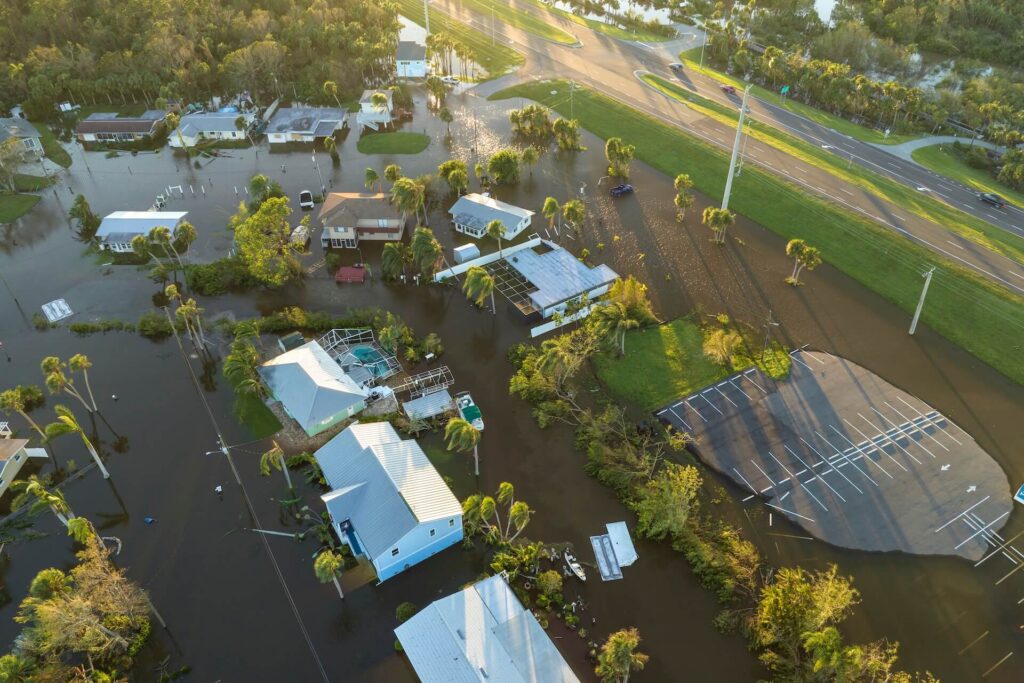
Properties in FEMA Special Flood Hazard Areas, California Fire Hazard Severity Zones, Gulf Coast hurricane corridors, and seismic hazard zones carry recorded instruments that have nothing to do with prior mortgage liens or judgment creditors. Government debris removal assessments recorded after a disaster event. FEMA hazard mitigation acquisition deed restrictions permanently limiting what a parcel can be used for. Force-placed insurance instruments recorded by lenders when admitted carrier coverage was cancelled or withdrawn from a high-risk market. Mandatory disclosure designation records that affect how a property can be marketed, financed, and sold. These are the encumbrances that natural hazard zone designations and disaster events generate in the public record, and finding them requires a title search that knows where they are recorded and which agencies put them there. Pippin Title provides specialised natural hazard zone title search services across wildfire, flood, hurricane, earthquake, and other designated risk areas that examine the full recorded instrument history behind affected properties so every encumbrance is identified before you close.
Title Research Built Around the Instrument Categories That Natural Hazard Designations Create
A property’s location in a natural hazard zone doesn’t just affect insurance premiums and lender requirements. It generates recorded instruments that attach to the title and bind every subsequent owner; instruments that a standard ownership and encumbrance search is not configured to find.
Natural hazard zone title research has become a distinct discipline as climate-driven disaster events have multiplied in frequency, scale, and geographic spread. Flooding, wildfires, hurricanes, and seismic events each generate their own category of recorded instrument when they intersect with government disaster programmes, lender risk management responses, and regulatory designation frameworks. A buyer or lender acquiring property in a designated risk zone without a search designed to surface those instruments is making a decision based on an incomplete picture of what the title actually carries.
Post-disaster government intervention at scale is the most immediate source of hazard-specific title encumbrances. When a federal or state agency authorises a debris removal programme, a hazard mitigation buyout, or an emergency demolition order and records its costs or conditions against affected parcels, those instruments enter the public record through administrative channels that sit outside the standard judgment lien and mortgage recording process. They don’t appear in a conventional lien search. They require the examiner to know which agencies record against real property in the affected jurisdiction, what those instruments look like, and where in the recording system they are indexed.
Beyond disaster-event encumbrances, the regulatory frameworks that govern natural hazard zone designations generate ongoing recorded obligations. Mandatory flood insurance requirements tied to FEMA Special Flood Hazard Area designations affect lender underwriting and buyer financing eligibility on every transaction in those zones. Fire Hazard Severity Zone designations in California trigger statutory disclosure obligations that affect marketing, sale, and the available pool of future buyers. Seismic hazard zone classifications and coastal erosion designations in other states carry their own regulatory instrument categories that must be examined alongside the standard title record.
Pippin Title examines the full recorded instrument history behind natural hazard zone properties: government-generated post-disaster liens and assessments, FEMA acquisition and mitigation deed restrictions, force-placed insurance instruments, mandatory hazard designation disclosure records, and all standard recorded encumbrances affecting ownership, insurability, and financing eligibility. You get the complete picture before the transaction proceeds.
Post-Disaster Government Liens, FEMA Deed Restrictions, and Hazard Mitigation Instruments
When government agencies intervene after a natural disaster, the instruments they record against affected parcels stay in the public record long after the recovery programme concludes. Finding them requires knowing which agencies record what, and where.
Government debris removal programmes, emergency demolition orders, and hazard assessment costs are recorded against affected parcels through administrative lien processes that operate independently of the county recorder’s standard instrument channels. In wildfire-affected communities, state-coordinated debris removal programmes have recorded costs against parcels where owners opted into the public cleanup process, with those instruments remaining as encumbrances until formally discharged. In flood-affected communities, emergency demolition and board-up liens recorded by municipal agencies against uninhabitable structures carry similar characteristics: they attach to the real property, survive ownership changes, and require active identification and resolution before a clear title position can be established.
FEMA hazard mitigation acquisition programmes purchase properties in high-risk zones to reduce future disaster exposure and record permanent deed restrictions against acquired parcels prohibiting future development. Those restrictions run with the land in perpetuity. Where acquired parcels are adjacent to properties being transacted, the existence of a permanently restricted neighbour affects access, drainage, shared utility easements, and development rights in ways that must be understood alongside the subject property’s own title record. In earthquake and landslide zones, state-administered hazard abatement programmes generate their own category of recorded order and assessment instrument that requires examination separately from the standard lien search.
Pippin Title researches post-disaster government lien categories by agency and recording source across wildfire, flood, hurricane, and seismic disaster designations, examines FEMA acquisition and hazard mitigation instruments, and identifies all recorded disaster-programme assessments affecting the property before any transaction proceeds.
Force-Placed Insurance Instruments, Hazard Designation Disclosures, and Financing Eligibility Encumbrances
When admitted insurance carriers withdraw from natural hazard zones, and when regulatory designations attach mandatory disclosure and insurance obligations to a property, the instruments that result affect every subsequent transaction on that parcel.
Force-placed insurance coverage, activated when homeowner policies lapse or are cancelled following admitted carrier withdrawal from a high-risk zone, generates lender-recorded instruments tied to the coverage cost recovery mechanism. In markets where major carriers have substantially withdrawn from flood plains, wildfire corridors, or hurricane exposure zones, force-placed coverage situations are no longer exceptional. They are a recurring feature of the title landscape in affected areas, and the instruments associated with them must be examined to confirm the property’s current insurance and lender relationship position before a new transaction is structured.
Mandatory hazard zone designation records affect financing eligibility and marketability in ways that attach to the property rather than the owner. FEMA Special Flood Hazard Area designations impose mandatory flood insurance requirements on all federally backed mortgage transactions, and those requirements follow the parcel through every subsequent sale and refinancing. California’s Very High Fire Hazard Severity Zone designations trigger mandatory disclosure obligations under state natural hazard disclosure statutes that affect what sellers must disclose, what buyers can expect from lenders, and what the available financing and insurance options are for any future transaction on the property. Hurricane wind zone, coastal erosion, and seismic hazard zone designations in other states carry comparable regulatory instrument categories that must be examined as part of any thorough natural hazard zone title search.
Pippin Title examines force-placed insurance instruments, lender-recorded security interest documents, mandatory hazard designation disclosure records, and all recorded encumbrances affecting financing eligibility and insurability across wildfire, flood, hurricane, earthquake, and other designated natural hazard zones nationwide.
Natural Hazard Zones Have Their Own Title Record. We Know How to Read It.
Post-disaster government liens, FEMA acquisition deed restrictions, force-placed insurance instruments, and mandatory hazard designation encumbrances are the recorded interests that natural hazard zone transactions generate and standard searches miss. Pippin Title’s natural hazard zone title search service finds all of them before you close, across wildfire, flood, hurricane, earthquake, and every other designated risk area nationwide.
Our Team Specializes In
Identifying government-recorded debris removal programme assessments, emergency demolition liens, and post-disaster administrative encumbrances across wildfire, flood, hurricane, and seismic disaster zones
Researching FEMA hazard mitigation acquisition deed restrictions and permanent open space covenants recorded against properties in designated natural hazard areas
Examining force-placed insurance instruments and lender-recorded security interest documents arising from admitted carrier withdrawal across high-risk markets nationally
Reviewing mandatory hazard designation disclosure obligations under state natural hazard disclosure statutes across FEMA Special Flood Hazard Areas, Fire Hazard Severity Zones, seismic hazard zones, and coastal erosion designations
Confirming all standard recorded liens, judgment interests, prior mortgage instruments, and encumbrances affecting ownership and insurability across the full property record
Researching state and local hazard abatement assessments, defensible space compliance orders, and mandatory mitigation instruments recorded through code enforcement and regulatory channels
Supporting buyers, investors, lenders, developers, insurers, and law firms in natural hazard zone acquisitions, post-disaster lot purchases, flood plain transactions, and climate risk market financings across all affected US jurisdictions
But it’s not just
about expertise:
It’s about efficiency.
We combine that deep domain knowledge with cutting-edge technology, using AI-assisted tools to generate commitments at record speed.
No more manual compiling or rekeying. Just clean, accurate data delivered directly into your workflow.
Whether you’re acquiring land, redeveloping a corridor, or launching a public infrastructure project ,Pippin gives you the clarity to move forward with confidence, and the tech to move faster.
Watch every step of your title search be turned around in as little as 24 hours.
We’re known in the industry for our accuracy, speed and transparent process, but when you choose Pippin for your title search, you’ll also get:
Easy to Use Dashboard
That integrates seamlessly with your existing workflows for simplified ordering, tracking, and invoicing.
Lightning-fast Service
For less hassle and delay; we’ll deliver your results in record time.
Always There For You
Thanks to support from our team of title search experts.
Real-time Order Tracking
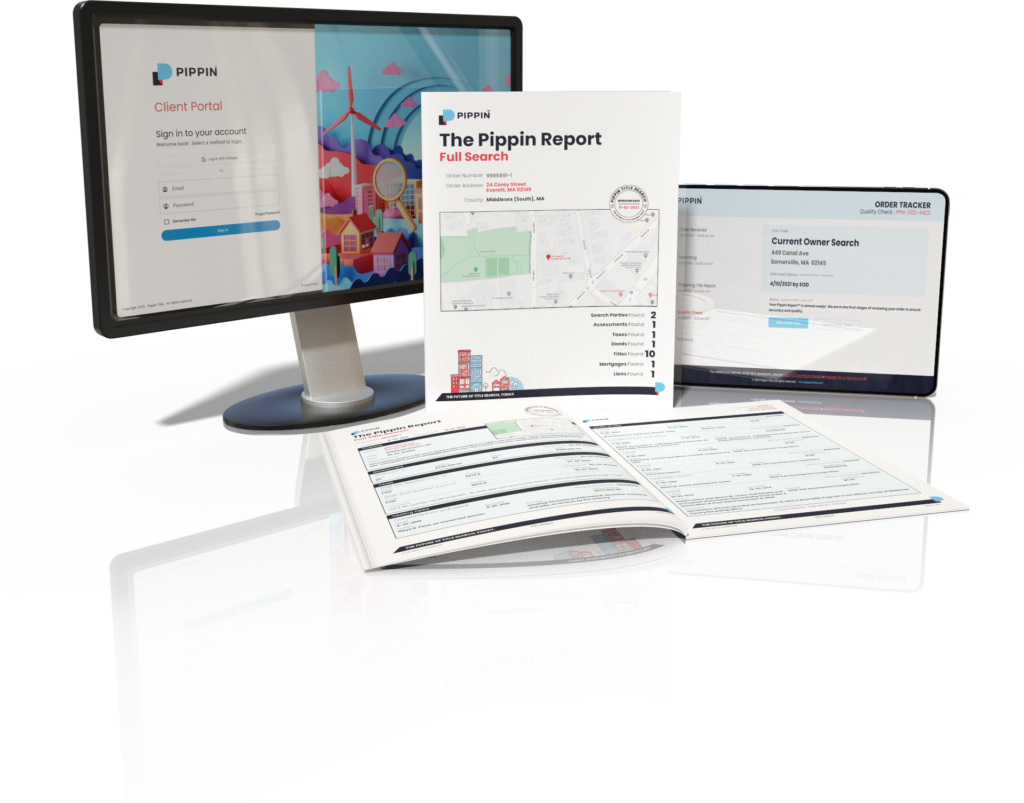
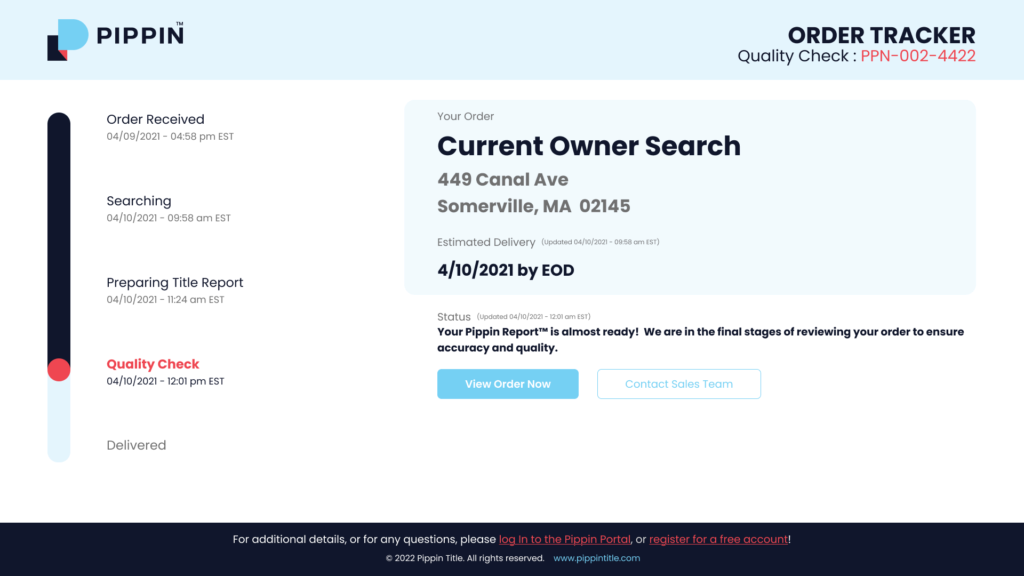
So you can access the status of your order 24 hours a day, 7 days a week.
Standard Format Reports
That are backed by our rigorous quality control process.
Local Expertise On-Demand
Thanks to our nationwide network of ground searchers and robust search capabilities.
Do your next title search with Pippin.
Forget chasing after ground searchers and poring over documents. With our proprietary search technology, reliable searcher network, and rigorous quality control, you get accurate, commitment-ready reports every time – fast.
Leveraging advance technologies, like AI, enables Pippin to provide title services in revolutionary ways. Below are some examples of how we can change your everyday experience in title. These are things you only get with Pippin Title.
“We appreciate the help Pippin Title has provided us with numerous title searches. Pippin Title is very responsive to any issues and easy to work with.”
Tallent Title Group
“When partnering up with another company, communication is key. Pippin has this down to a science. It is so refreshing to know that a vendor is listening to our company’s wants and needs and will implement our requests in a seamless manner. We couldn’t be happier and are excited to continue to work with Pippin.”
ANS Title
“Pippin Title has consistently been very quick with their responses and their turnaround times from the time we have submitted a title request to them. Our team has literally had nothing but good and positive experiences with Pippin Title and will undoubtedly continue to use Pippin for all of our many Title needs!”
Hutton Law
“We know if we need a vendor to get a complete search even in the most rural areas, we can count on Pippin to get that back to us on time, correct, and for a decent price.”
Old Republic Title
“We have had a first-rate experience with Pippin. Their customer service is second to none. The portal for order requests is easy to navigate and very user friendly. The title reports provided are comprehensive. If we have to request additional documents, they are quick with their retrievals. They are extremely responsive and a pleasure to partner with. I recommend Pippin to anyone needing residential or commercial search services.”
Investor’s Title
“Easy Knock has been working with Pippin Title for over a year now and are extremely happy with the quality of data and level of service provided. The portal is very easy to use, the response times are faster than other providers, and the results are accurate. The team is very responsive to any questions and reaches out for clarifications on orders. The team at Pippin built an API solution to assist with automation at our end. We would highly recommend Pippin.”
If you still have general questions, fill out the form below to contact a Pippin Title rep.
By providing a telephone number and submitting this form you are consenting to be contacted by SMS text message. Message & data rates may apply. You can reply STOP to opt-out of further messaging.